Well pump repair in El Paso starts with a diagnosis, not a pull. Replacing a submersible pump in Texas typically costs $1,200 to $3,500 installed, and a complete pump system $2,500 to $6,000, but a large share of no-water calls turn out to be a tripped breaker, a failed pressure switch, a bad control box capacitor or a waterlogged pressure tank. Those are hours, not thousands.
The other reason to measure before lifting anything: in El Paso County the pump may not be the problem at all. Median static water level across the 517 filed county well reports is 15 feet below surface, but the middle half of records spans 9 feet to 175 feet. On a deep mesa well a falling water level can strand a correctly working pump above the water, and no amount of new hardware fixes that.
What pump work costs in El Paso, TX
Pump price is driven by the lift, which is driven by your setting depth. That is why the same job costs so differently on a Canutillo valley well and a Montana Vista mesa well.
| Item | Typical Texas range | Notes |
|---|---|---|
| Pump, 0 to 100 ft (1/2 HP) | $500 to $700 | Common in Rio Grande valley alluvium wells |
| Pump, 100 to 200 ft (3/4 HP) | $600 to $900 | Valley margin and terrace properties |
| Pump, 200 to 300 ft (1 HP) | $800 to $1,200 | Mesa edge |
| Pump, 300 to 400 ft (1.5 HP) | $1,000 to $1,500 | Bolson fill wells |
| Pump, 400 to 600 ft (2 HP) | $1,200 to $1,800 | Deeper bolson |
| Pump, 600 ft and deeper (3 HP) | $1,500 to $2,000 and up | Deep mesa production wells |
| Pump replacement, installed | $1,200 to $3,500 | Pull, replace and reinstall |
| Complete pump system, installed | $2,500 to $6,000 | Pump, tank, controls and connection |
| Wiring and drop pipe by depth | $1,000 to $5,000 | $1,000 to $1,500 under 100 ft, $3,000 to $5,000 past 500 ft |
These are Texas market ranges rather than El Paso-only figures. Your actual number depends on setting depth, whether drop pipe and wire need replacing, and how much electrical work the wellhead needs. Every quote we send states which of those are included.
What is actually wrong: the usual list
No water at all
Check the breaker and the pressure switch contacts first, then the control box on a three-wire pump. If power is reaching the motor and nothing is moving, the pump or the wire has failed and the string has to come up. If the well is on the deep end of the county spread, confirm the water level before pulling: a dry hole and a dead pump look identical from the kitchen tap.
Pressure drops off while running
This is usually drawdown outrunning the well's recovery, which means the pump is moving more water than the screen can deliver. On an older well that has slowly plugged with scale or fines, the fix is rehabilitation rather than a bigger pump. Fitting a bigger pump to a well that cannot feed it accelerates the failure.
Air spitting from the taps
Air in the lines generally means the pump is breaking suction because the pumping level has fallen to the intake. Lowering the pump is sometimes possible, but only if there is column below it and the water down there is not markedly saltier, which is a real consideration in both El Paso bolsons where salinity increases with depth.
The pump runs every thirty seconds
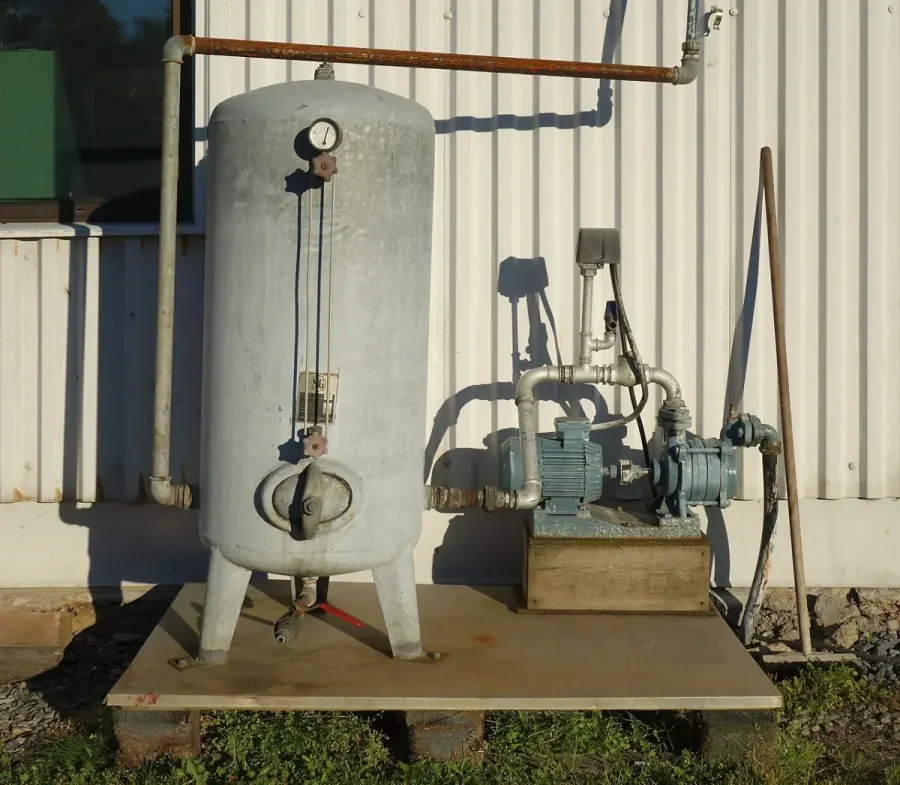
That is a pressure tank problem in most cases, not a pump problem. A tank that has lost its air charge gives the system no cushion, so the switch trips constantly and the motor takes a start every time. Left alone it will eventually kill a healthy pump, which is how a $200 problem becomes a $3,000 one.
How we work a pump call
- 1Check the cheap causes first
Breaker, pressure switch, control box and the pressure tank air charge, in that order. A meaningful share of no-water calls end here for a fraction of the cost of a pull, and no honest diagnosis starts by lifting pipe out of the ground.
- 2Measure static and pumping water level
A sounder down the casing gives the standing level and how far it draws down under load. El Paso County static levels run a median of 15 feet with the middle half of records between 9 and 175 feet, so knowing where your well sits in that spread tells us whether the pump lost the water or the water lost the pump.
- 3Pull the pump and inspect the string
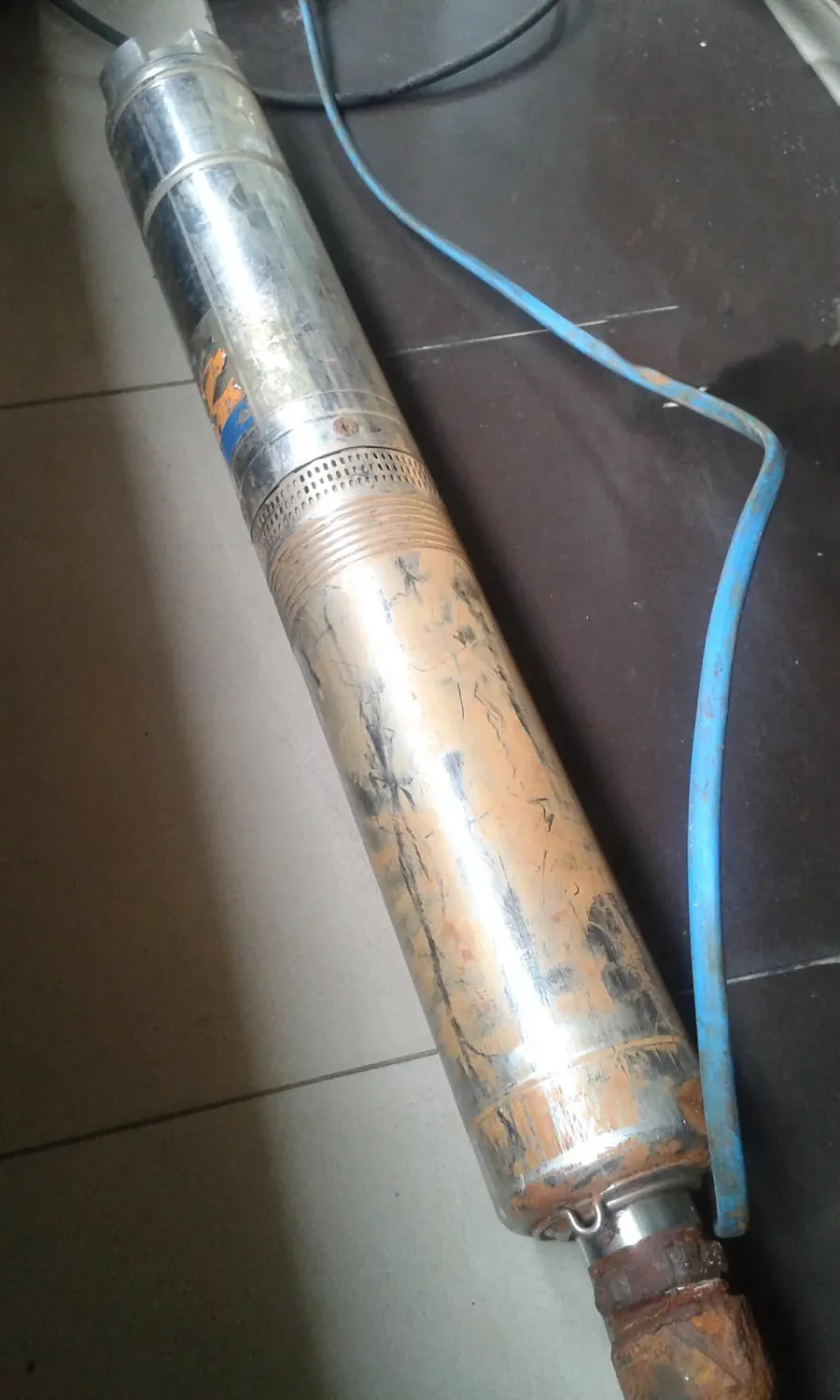
Pump, drop pipe, wire, check valve and torque arrestor all come up together and all get looked at. Scale, corrosion and sand wear on the impellers each point at a different underlying cause, and the string tells that story more clearly than the motor does.
- 4Size the replacement against real numbers
Horsepower and stage count are chosen from tested yield, drawdown and setting depth, with the pump set above the producing interval rather than in it. Getting this right is what stops the new pump repeating the failure of the old one.
- 5Reinstall, wire and test under load
New drop pipe and wire where the old is suspect, a fresh check valve, then a run test measuring flow, pressure and cycle time. You get the numbers written down, because they are the baseline that makes the next problem quick to diagnose.
Sizing the replacement properly
The right pump is chosen from three measured numbers: the well's tested yield, how far the level draws down under that load, and the setting depth. Against those, horsepower and stage count are an engineering decision rather than a guess at what was there before.
This matters more in El Paso than the raw yield numbers suggest. Aquifer-wide yields in the Hueco-Mesilla Bolsons run 150 to 2,000 gallons per minute with a mean near 900, and the median tested yield on filed county reports is 700, but those figures are dominated by municipal and irrigation wells. A domestic well completed in a thin producing interval may deliver a fraction of that, and it is your well's tested number that sizes your pump, not the aquifer's reputation.
If you do not have a recent test, an inspection will produce one, and your original State of Texas Well Report will usually carry the figures from the day the well was completed. Comparing the two is the fastest way to see whether the well has declined or the hardware has.
Pressure tanks, switches and booster pumps
A pressure tank is the cheapest component in the system and the one that kills the most pumps. It holds a cushion of compressed air so the pump can deliver a volume of water per start instead of starting every time a tap opens. When the bladder fails or the air charge leaks away, the tank waterlogs, the pump short cycles, and the motor burns through its start cycles in months rather than years.
| Tank size | Typical Texas range | Suits |
|---|---|---|
| 20 gallon | $500 to $700 | A small valley house on a shallow pump |
| 35 gallon | $600 to $900 | Most three bedroom households |
| 50 gallon | $800 to $1,200 | Larger homes, or a deeper pump you want starting less often |
| 85 gallon | $1,200 to $1,600 | Acreage with irrigation or livestock draw |
| 120 gallon | $1,500 to $2,000 | High demand, or a long run from wellhead to house |
Texas market ranges, not El Paso-only figures. Bigger is not automatically better: the right size is the one that keeps the pump inside its rated starts per hour at your household's draw.
Two quick checks you can do before calling anyone. Tap the side of the tank: a healthy tank rings hollow near the top and sounds solid near the bottom, while a waterlogged one sounds solid all the way up. Then time the pump cycle while one tap runs steadily. Under a minute between starts means the tank, the switch or the check valve is the problem, and none of those require pulling pipe.
Booster pumps are a separate question and come up on long runs. On acreage where the wellhead sits well away from the house, or where the ground rises between the two, a correctly sized well pump can still leave weak pressure at the fixtures. Boosting at the house is usually cheaper and kinder to the well pump than oversizing the submersible to compensate.
Water quality shortens pump life here
Brackish water is hard on equipment. Both El Paso bolsons grade from fresh to saline with depth and toward the south, with the upper Hueco running roughly 1,000 to 3,000 mg per liter of total dissolved solids per El Paso Water, and water level declines have raised salinity over time. Higher dissolved solids mean more scale on impellers and more corrosion on casing, wire splices and fittings.
If your pumps have been failing faster than the 8 to 15 year industry expectation, a water test is a cheap piece of the answer. Sometimes the fix is a material change rather than another identical pump, and you will not know that without the numbers. Send the details through the contact form and include the well depth if you have it, or check coverage on the service area page.