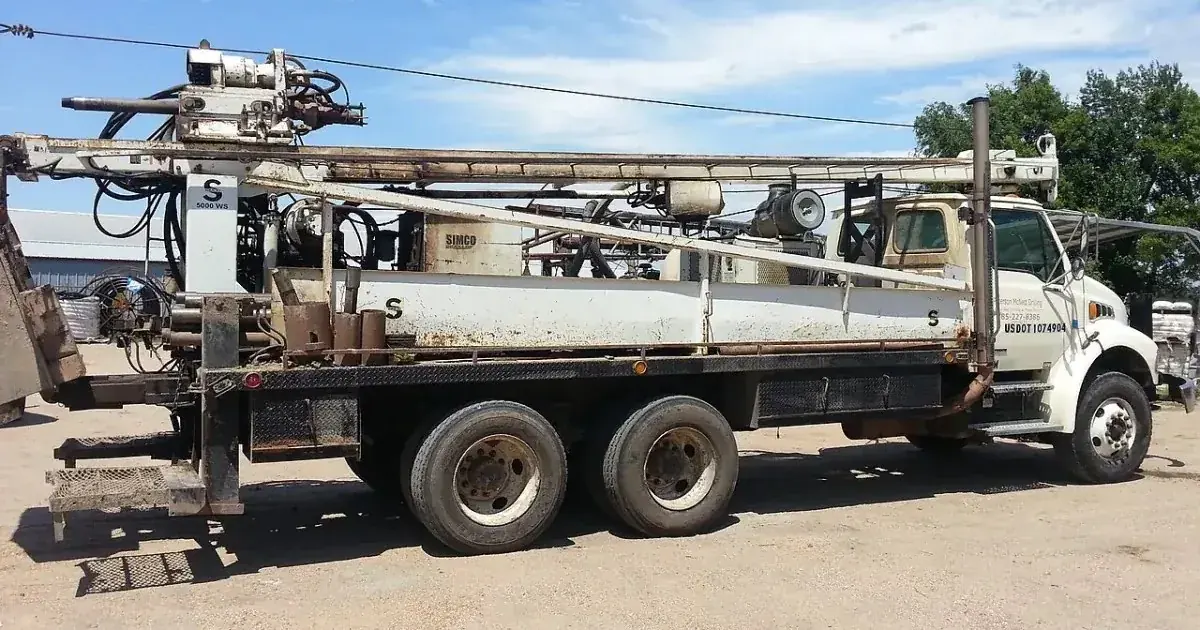
Water Well Work Built on El Paso County Records
We drill, service and plug water wells across El Paso County and the western edge of Hudspeth County. Every quote starts with the State of Texas Well Reports already filed near your property, because a county average is a poor way to price a hole in the ground.
Most of what goes wrong on a residential well in El Paso County is decided before the rig arrives. The target depth, the casing spec, where the screen goes, whether the setback leaves a workable location: get those right and the well is unremarkable for thirty years. Get them wrong and no amount of equipment at the house fixes it.
So that is where we put the effort. Before quoting we pull the filed State of Texas Well Reports around the property and read what nearby drillers actually logged: completed depth, static water level, formations, tested yield. Those records are public, they are free, and they are far better evidence than the 350 foot county figure that national cost pages model El Paso on. The filed median is 160 feet.
What is in a quote from us
- A target depth range, taken from the filed reports nearest the property
- Casing diameter and material, and the completion method for the producing interval
- The per-foot rate, and what happens to the price if the hole has to run deeper
- The pump size the household actually needs, based on 5 to 10 gallons per minute at peak
- Whether the number covers drilling and casing only, or a complete working system
- TDLR license numbers for the driller and the pump installer
Without those items two bids cannot be compared however similar the totals look, which is the single most common way people overpay on a well in this county.
What We Will Tell You Not to Buy
A water softener does not fix salty water. That is the most expensive misunderstanding in El Paso County, and it happens because salinity and hardness both announce themselves at the kitchen tap. A softener exchanges hardness ions for sodium and leaves total dissolved solids roughly where they were.
The same logic runs through the rest of the work. A no-water call is usually a breaker, a pressure switch, a control box or a waterlogged tank before it is ever a failed pump. A well that has lost yield often has a plugged screen rather than a dry aquifer. Testing and measuring first is cheaper than replacing hardware and hoping.
How we test and what each result means →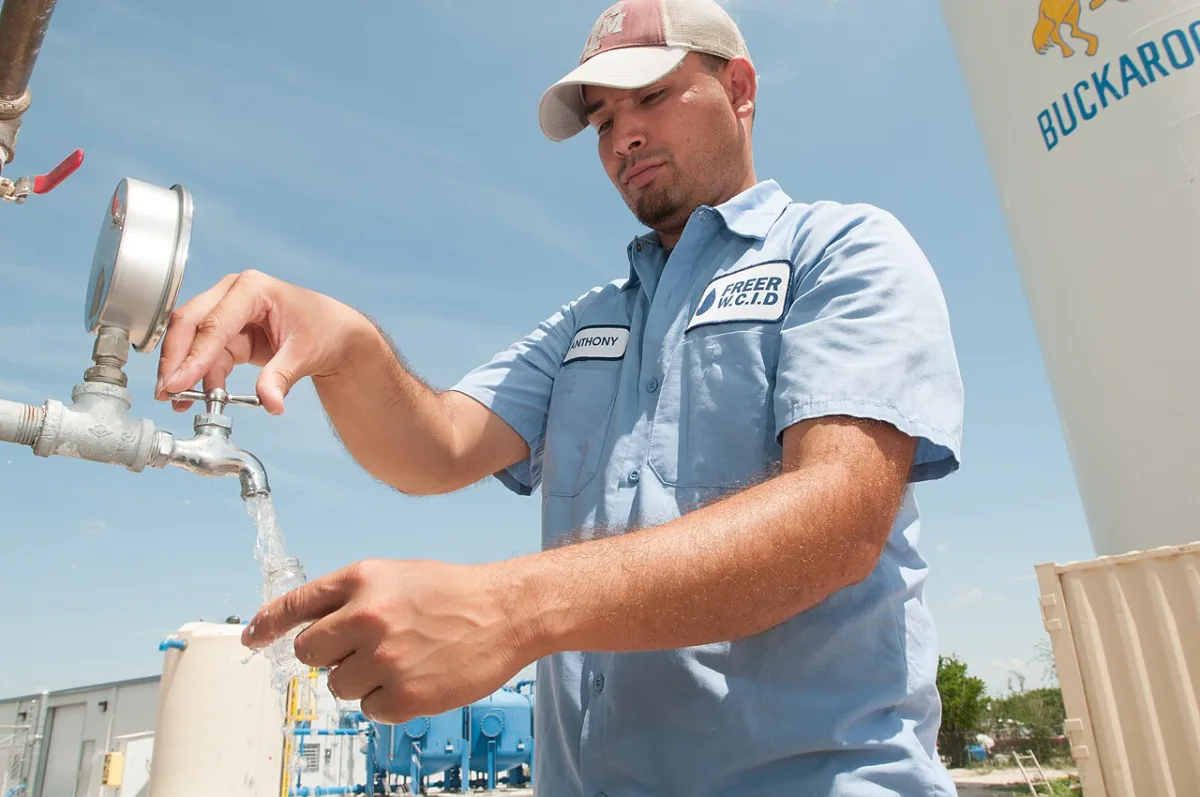
Licensing, reporting and the things we do not claim
Water well drillers are licensed under Texas Occupations Code Chapter 1901 and pump installers under Chapter 1902, both through the Texas Department of Licensing and Regulation, and the technical rules sit in Title 16 of the Texas Administrative Code, Chapter 76. The State of Texas Well Report for every well we complete is filed through the state system inside the 60 day deadline, and you get a copy for the property file.
El Paso County has no groundwater conservation district, so nobody is inspecting these wells on a schedule and there is no district permit standing between a bad well and the aquifer. That makes the construction standards a matter of the contractor's choice rather than an inspector's, which is worth knowing when you are comparing bids.
We do not publish customer reviews or testimonials on this site, because we would rather show you the records than a quote we wrote ourselves. What we will do is read the filed well reports near your property with you and explain what they imply about depth, water level and quality, before anyone talks about price.
Start with the records, not a guess
Send the property address through the contact form. Reading the filed well reports around it is free, and it is the fastest way to know what you are dealing with.
Get a Free Quote