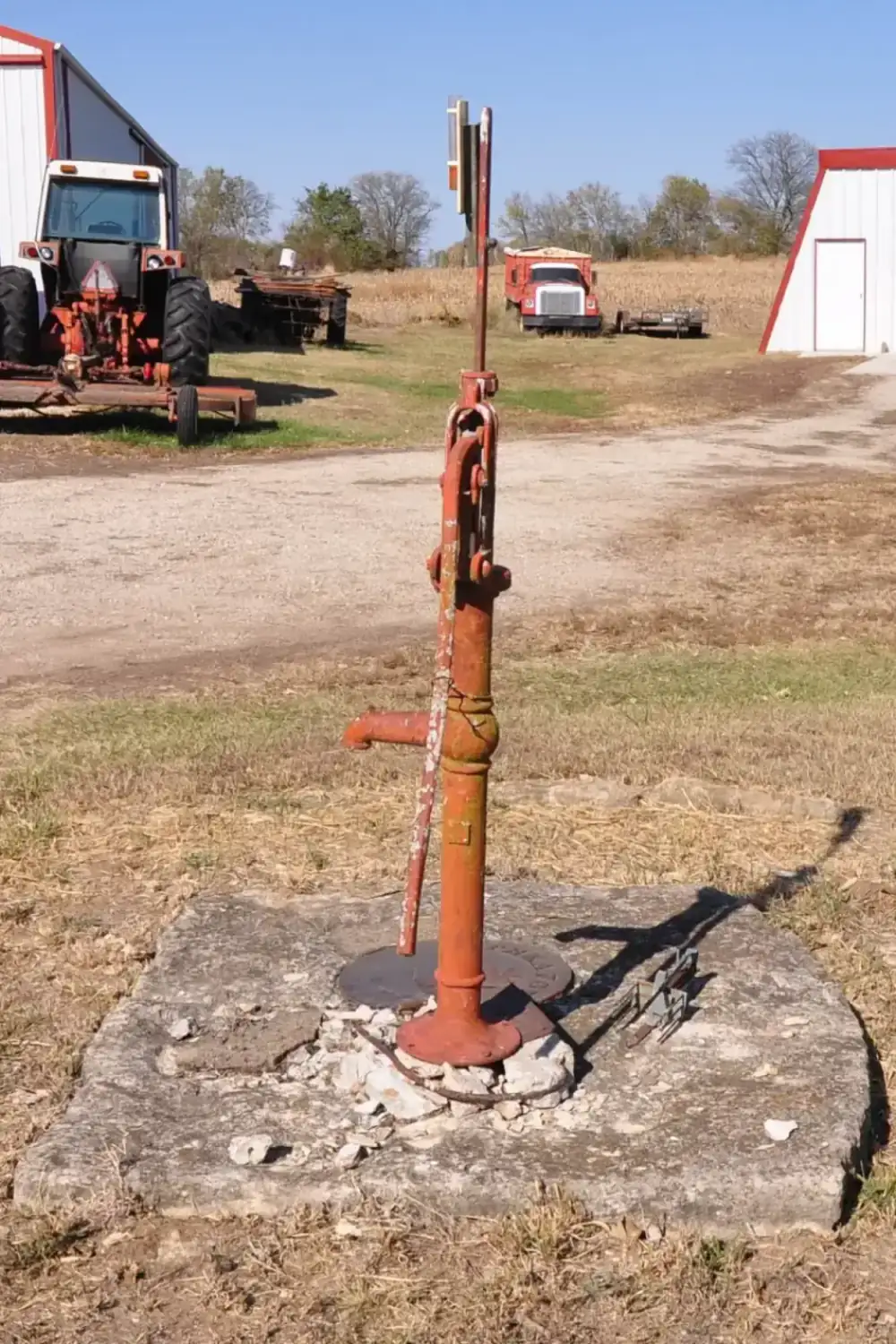
Plugging an abandoned water well in Texas means pressure filling the borehole with cement through a tremie pipe from the bottom up to the land surface, and in El Paso County it is the landowner who has to see that it happens. The Texas Water Development Board states that by law Texas landowners are responsible for plugging abandoned wells and liable for any water contamination or injury they cause.
There is no district permit to pull for this work here, because El Paso County has no groundwater conservation district. That removes paperwork, not responsibility. The method requirements in the Texas Department of Licensing and Regulation rules apply in full, and because nobody is inspecting these wells on a schedule, the only thing standing between an open casing and the aquifer is the owner deciding to close it.
When a well has to be plugged, and when capping is enough
The rules turn on two definitions, and they are worth reading carefully because they decide which job you are paying for.
Abandoned well
Under 16 Texas Administrative Code Section 76.10, an abandoned well is a well that is not in use, subject to stated conditions on casing, capping, beneficial use and participation in conservation programs. A well you stopped using but have kept sound and capped is treated differently from one you walked away from.
Deteriorated well
The same section defines a deteriorated well as one that, because of its condition, will cause or is likely to cause pollution of any water in this state, including groundwater. That is the category that forces the issue. A deteriorated well cannot be left capped and monitored, because its condition is itself the hazard.
How plugging is done, and what it is not
Cement goes in through a tremie pipe set at the bottom of the hole and is brought up to the land surface under pressure, which is the method written into 16 Texas Administrative Code Section 76.104. The rule also permits bentonite grout, or compacted clay or caliche, for certain wells. Doing it from the bottom up is the whole point: it fills the column without bridging and without leaving voids that later collapse.
Filling a well from the top with soil, gravel, rubble or an old vehicle is not plugging, and it is unfortunately common on older rural properties. It leaves the annulus open, it leaves voids that settle, and it leaves the landowner with the identical liability they had before the effort. It also makes the eventual proper job harder and more expensive, because everything that went in has to come back out.
Why this matters more in the El Paso valley than most places
Shallow groundwater makes a short path, and the filed records show how short. Across 517 State of Texas Well Reports for El Paso County the median static water level is 15 feet below the surface, with the middle half of records spanning 9 to 175 feet. On a valley property where water sits a few feet down, an open casing connects whatever crosses the yard directly to the water table with almost nothing in between.
The aquifer that path leads into is not a local curiosity either. The Hueco Bolson is the principal aquifer for the El Paso area and Ciudad Juarez, and the Texas Water Development Board records that nearly 90 percent of the water pumped from the Mesilla and Hueco bolsons in Texas goes to public supply. An old well on a Socorro or San Elizario lot is upstream of far more than one household.
Finding out whether there is an old well on your property
Start with the filed well reports, then walk the ground. The Texas Water Development Board publishes its Groundwater Database, the Water Data Interactive map and the Submitted Drillers Report Database, and a search on the property location will usually surface any well that was drilled and reported legally. That gives you a depth and a completion record before anybody quotes you.
Reports only exist for wells that were filed, so older hand-dug and pre-reporting wells will not appear. On the ground the tells are a lone concrete slab, a stub of casing in the weeds, an orphaned pipe run heading nowhere, a disused windmill base, or a circle of ground that settles differently after rain. Buying acreage in the Lower Valley is the moment to look hard, because the obligation transfers with the deed.
Where plugging fits alongside the rest of the work
Plugging is usually the last step of a larger decision rather than a job on its own. If an existing well has failed, the sequence that saves money is to test the water and check the pump and pressure system before assuming the well itself is finished. Plenty of wells written off as dead turn out to have a plugged screen or a pump set above a fallen water level.
When the well genuinely is finished, the honest plan is a new well and the old one plugged, quoted together. Leaving the old casing open beside a new well is the worst of both outcomes: you have paid for clean water and left the contamination path in place next to it. Send the details through the contact form, or check coverage on the service area page.