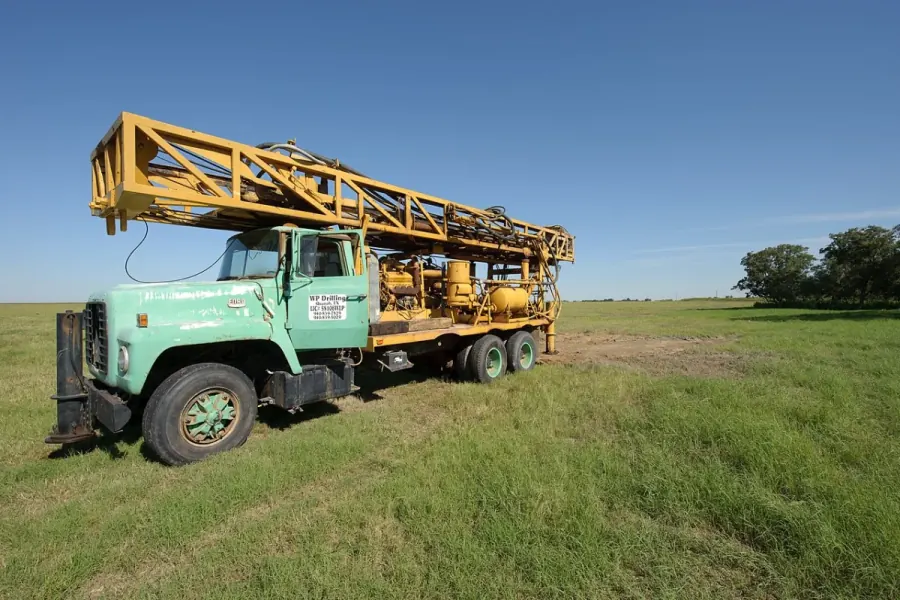
How much does it cost to drill a well in Texas?
Drilling runs about $25 to $58 per foot statewide, and the average complete Texas water well project comes to roughly $8,550, according to the cost data published by WellDrillingCosts. El Paso sits above that statewide average at $28 to $64 per foot, because the mesa formations are harder and brackish zones have to be cased off. At the El Paso County median depth of roughly 180 feet for wells drilled since 2016, a complete system with casing, pump, pressure tank, electrical and water testing works out to about $10,800 to $18,000.
How much does it cost to drill a 1,000 foot well?
At El Paso rates of $28 to $64 per foot, 1,000 feet of drilling alone is $28,000 to $64,000 before casing, pump, tank and electrical are added. That is arithmetic from the per-foot range, not a quote, and very few homes here need that depth. Of 517 State of Texas Well Reports filed in El Paso County, 124 are deeper than 600 feet, and those are mostly municipal and irrigation wells rather than houses.
How deep are water wells in El Paso County?
The median depth across 517 State of Texas Well Reports filed in El Paso County is 160 feet, rising to about 180 feet for wells drilled since 2016. The typical range is 80 to 570 feet. You will see 350 feet quoted as the El Paso norm on national cost sites, and the filed well reports do not support that: 240 of those 517 wells are shallower than 150 feet. Depth depends far more on whether your lot sits in the Rio Grande valley or up on the mesa than on any county-wide average.
Do I need a permit to drill a water well in Texas?
In El Paso County there is no groundwater conservation district, so there is no district drilling permit and no district spacing rule. The Texas Water Development Board lists El Paso and Hudspeth counties as Groundwater Management Area 5 and states plainly that no groundwater conservation districts exist inside it. The state rules still apply: the work has to be done by a driller licensed by the Texas Department of Licensing and Regulation, a State of Texas Well Report must be filed within 60 days of completion, and the well has to sit at least 50 feet from any septic tank or drain field.
What is the lifespan of a water well?
Industry sources put the working life of the well itself at roughly 20 to 50 years, with the components inside it wearing out much sooner. Groundwater association and Water Well Journal life-cycle material puts a submersible pump at about 8 to 15 years, a pressure tank at 10 to 15, and controls and switches at 10 to 20. Those are industry estimates rather than a guarantee. What usually ends a well early here is not age but a collapsed or encrusted screen, or a casing that was never sealed properly against a brackish zone.
Is El Paso well water salty?
It can be, and it depends on which aquifer and which depth the well draws from. El Paso Water describes the upper Hueco Bolson as fresh to slightly saline at under 1,000 to 3,000 mg/L of total dissolved solids, and the Texas Water Development Board puts the fresher upper part at under 500 to over 1,500 mg/L. Salinity generally increases with depth, toward the south of the county, and where water levels have dropped. Test for total dissolved solids before you size any treatment equipment, because a softener and a reverse osmosis system solve different problems and cost very different money.
Can I drill my own well in Texas?
A landowner may drill a well on their own property for their own use without holding a driller license, but the paperwork obligation does not disappear. The Texas Water Development Board is explicit that a State of Texas Well Report still has to be submitted for the well, and that the landowner carries responsibility for plugging it when it is abandoned along with liability for contamination or injury caused by it. In practice, most people who try it in El Paso County stop when they hit the caliche and cemented gravel that a rented auger cannot get through.
How far does a water well have to be from a septic system?
Fifty feet, measured to both the septic tank and the drain field, under the Texas Commission on Environmental Quality on-site sewage facility rules in Title 30 of the Texas Administrative Code, Chapter 285. El Paso County subdivision regulations require on-site sewage facilities to comply with those state rules. On a small valley lot that setback, not the geology, is usually what decides where the rig can sit.
Who is responsible for plugging an abandoned well?
The landowner. The Texas Water Development Board states that landowners are responsible for plugging abandoned wells on their property and are liable for contamination or injury that an open well causes. An uncapped well is a direct pipe from the surface into the aquifer your neighbors drink from, and in the valley, where static water can sit within 15 feet of the surface, that path is very short.
How can I find out how deep my neighbor's well is?
Look the property up in the state well report databases before you spend money on an opinion. The Texas Water Development Board publishes its Groundwater Database, the Water Data Interactive map, and the Submitted Drillers Report Database, and between them you can pull filed reports for nearby wells showing total depth, static water level, what formation the driller logged and the tested yield. That is the single most useful hour you can spend before requesting quotes, and it is free.